

Whether you're heading out for a weekend city break, a business trip, a conference in another city, or a spontaneous getaway, a 3-day trip has become one of the most common travel styles today.
Yet many travelers ask the same questions before departure:
What should I pack for a 3-day trip?
Do I need a suitcase?
What size backpack is enough?
What's the difference between a business travel backpack and a regular backpack?
The good news is that most 2–3 night trips don't require a bulky carry-on suitcase. With the right travel backpack and a smart packing strategy, you can comfortably carry everything you need while staying mobile and organized.
In this guide, we'll cover a complete 3-day packing list, space-saving packing tips, backpack selection advice, and recommendations for some of the best backpacks for short trips.
Why a Backpack Is Better Than a Suitcase for a 3-Day Trip

For short trips, a backpack often provides greater convenience and flexibility than a traditional carry-on suitcase.
Save Time
Using a carry-on backpack that meets airline cabin requirements allows you to avoid:
Checking luggage
Waiting at baggage claim
The risk of lost luggage
For frequent travelers and business professionals, saving 30 minutes or more per trip can make a significant difference.
Move More Freely
A backpack makes navigating the following situations much easier:
Subway transfers
Cobblestone streets
Train station stairways
Airport security checkpoints
Unlike rolling luggage, a backpack keeps your hands free and your movement unrestricted.
Better for Mobile Work
For business travelers, laptops, tablets, chargers, and documents are often more important than extra clothing.
A professional business travel backpack typically includes:
Dedicated laptop compartments
Organized tech storage
Quick-access pockets for airport security
This allows you to access your devices without opening your entire bag in public.
What to Pack for a 3-Day Trip: Complete Packing List
1. Clothing Essentials
A simple rule to follow:
Wear 1 outfit + Pack 2 additional outfits
Recommended Clothing
2 T-shirts or shirts
3 pairs of underwear
3 pairs of socks
1 set of sleepwear
1 extra pair of pants (optional)
Seasonal Adjustments
Spring & Fall
Lightweight jacket × 1
Summer
Sun protection jacket × 1
Winter
Thermal base layers
Wear your down jacket instead of packing it
2. Tech and Work Essentials
Electronics often take up more space than clothing during modern travel.
Recommended items:
Smartphone
Laptop
Tablet (optional)
Noise-canceling headphones
Power bank
GaN charger
USB-C charging cables
For business travelers, a backpack with a dedicated tech organization system can significantly improve convenience.
3. Toiletries
Whenever possible, use travel-size products.
Recommended items:
Toothbrush
Toothpaste
Facial cleanser
Travel-size skincare products
Sunscreen
Razor
Before departure, check whether your hotel provides complimentary toiletries.
4. Travel Documents and Payment Methods
Before leaving, make sure you have:
Passport or ID card
Boarding pass
Hotel reservation details
Credit or debit cards
A small amount of cash
Store these items in a secure hidden pocket for easy access.
5. Emergency Essentials
Consider packing:
Bandages
Pain relievers
Digestive medication
Wet wipes
Compact umbrella
These small items can be extremely useful when unexpected situations arise.
5 Packing Tips to Maximize Backpack Space
1. Roll Clothes Instead of Folding
Rolling clothing can:
Save 20–30% of packing space
Reduce wrinkles
Improve organization
2. Use Compression Packing Cubes
Compression cubes help reduce the bulk of clothing significantly.
They're especially useful when traveling with backpacks in the 20L–25L range.
3. Keep Heavy Items Close to Your Back
Examples include:
Laptop
Tablet
Power bank
This improves weight distribution and carrying comfort.
4. Create a Dedicated Tech Organization System
Store the following items together:
Charging cables
Adapters
Chargers
USB drives
Using a dedicated tech organizer prevents unnecessary searching at airports and hotels.
5. Avoid Packing for "Just in Case"
Most travelers overpack.
In reality, many backup items never leave the bag during the entire trip.
Pack for what you'll actually use—not every possible scenario.
How to Choose the Right Backpack for a Short Trip
Before buying a travel backpack, identify your travel style.
Type 1: Business Travel
Characteristics
Traveling with a laptop
Frequent mobile work
1–2 night business trips
Recommended Capacity
22L–25L
Key Features
Laptop compartment
Tech organization
Professional appearance
Type 2: Urban Leisure Travel
Characteristics
2–3 night trips
More clothing and personal items
Recommended Capacity
28L–35L
Key Features
Large main compartment
Suitcase-style opening
Comfortable carry system
Type 3: Photography Travel
Characteristics
Camera gear
Multiple lenses
Drone equipment
Recommendation
A modular photography backpack with customizable storage.
Best Backpacks for Short Trips
Nayo Smart Herman Pro

Best For
Business professionals
IT workers
Digital nomads
Daily commuters
Key Specifications
Approx. 22L capacity
Dedicated laptop compartment
Multiple tech organization pockets
Water-resistant fabric
Luggage pass-through strap
Carry-on friendly size
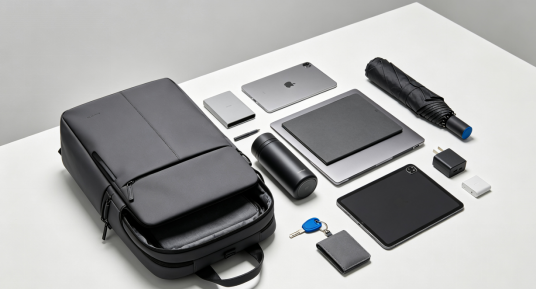
Typical Packing Example
A typical loadout might include:
14-inch laptop
iPad
Mouse
Charger
Cable organizer
2 T-shirts
1 dress shirt
Toiletry pouch
10,000mAh power bank
While still maintaining good organization and accessibility.
Pros
✔ Excellent tech organization
✔ Ideal for commuting and business travel
✔ Professional appearance
✔ Strong value for money
Cons
✘ Limited space for extra shoes
✘ Bulky winter clothing can be difficult to pack
✘ Less suitable for trips longer than 3 days
Peak Design Travel Backpack 30L

Best For
Photographers and content creators.
Pros
Modular design
Expandable capacity
Excellent photography ecosystem
Cons
Premium pricing
Accessories often sold separately
Osprey Daylite Expandable Travel Pack
Best For
Leisure travelers and light outdoor adventures.
Pros
Lightweight design
Comfortable carry system
Excellent expandability
Cons
Less suitable for formal business environments
Quick Backpack Buying Guide
Choose the Nayo Smart Herman Pro if you:
Frequently carry a laptop
Travel regularly for work
Want one backpack for both commuting and travel
Value organization and efficiency
Choose the Peak Design Travel Backpack if you:
Carry photography equipment
Create content while traveling
Choose the Osprey Daylite Expandable Travel Pack if you:
Prefer leisure travel
Prioritize lightweight comfort
Final Thoughts: The Best Backpack Is the One That Fits Your Travel Style
For most short trips, the most important factor isn't the biggest capacity—it's choosing a backpack that matches your travel needs.
If your trips revolve around laptops, tablets, and mobile work, and you want a backpack that performs equally well for daily commuting and 1–2 day business travel, the Nayo Smart Herman Pro is a compelling option. While it isn't the largest travel backpack on the market, it excels in tech organization, professional aesthetics, and everyday practicality.
If you regularly pack extra shoes, bulky clothing, or gear for trips lasting more than three days, a larger 30L–35L travel backpack such as the Osprey Daylite Expandable Travel Pack may be a better fit.
Remember: the best travel backpack isn't the one that carries the most—it’s the one that makes your journey easier.
Frequently Asked Questions (FAQ)
What size backpack do I need for a 3-day trip?
For business travelers, a 22L–25L backpack is often sufficient. If you plan to carry more clothing, shoes, or additional gear, consider a 30L–35L travel backpack.
Can a 22L backpack handle a 3-day trip?
Yes. With compression packing cubes and efficient packing techniques, a 22L backpack can comfortably support a minimalist 3-day trip. However, larger gear or winter clothing may require additional capacity.
Is a backpack better than a suitcase for short trips?
For most 2–3 day trips, a backpack offers greater mobility and convenience, especially for business travel, city exploration, and frequent transportation changes.
What features matter most in a business travel backpack?
A dedicated laptop compartment, organized tech storage, comfortable carry system, and luggage pass-through strap are among the most valuable features.
Is the Nayo Smart Herman Pro suitable for long-term travel?
The Herman Pro is best suited for daily commuting and 1–2 day business trips. Travelers planning longer journeys may benefit from a larger 30L+ travel backpack.
What backpacks can be carried onto an airplane?
Most 22L–25L backpacks meet personal-item or carry-on requirements and can often fit under the seat. Larger 30L–35L travel backpacks typically need to be stored in the overhead bin.


分享:
Why Do Programmers Prefer Backpacks? 2026 Best Programmer Backpack Recommendations & Buyer’s Guide
Your Backpack Choice Reveals Your Personality: What Kind of Carry Personality Are You?