

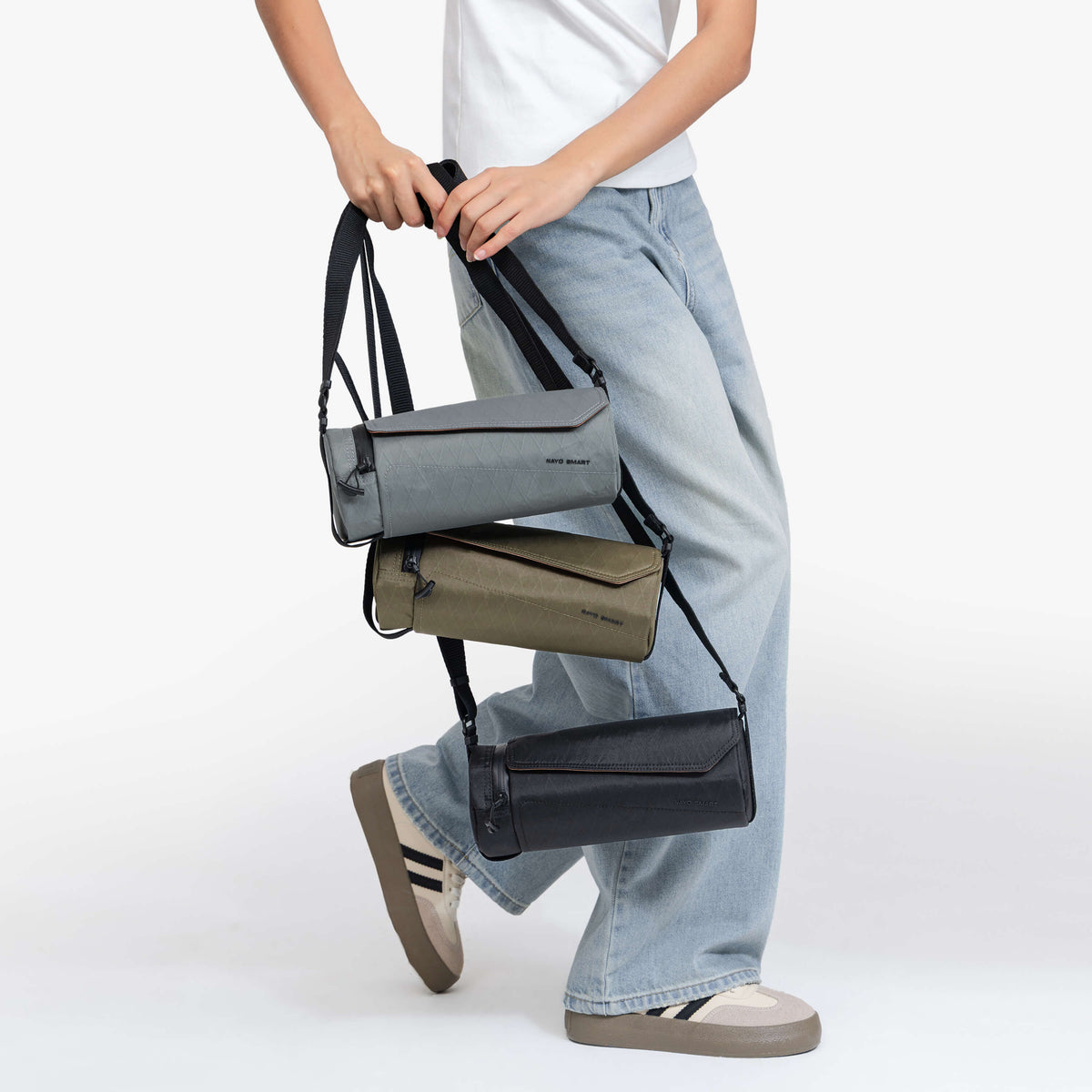

When shopping for a backpack, most people focus on a few obvious factors:

Is the capacity large enough?

Does it look good?

Can it fit a laptop?

Is the price reasonable?

But very few people stop to ask an important question:

What is the real cost of choosing the wrong backpack?

The truth is, a backpack is much more than a container for carrying your belongings.

It accompanies you through commuting, business trips, meetings, travel, and daily life. Over time, it can influence your productivity, physical comfort, mental energy, and even your professional image.

Many people think they simply bought the wrong bag.

In reality, they're paying a long-term hidden cost every single day.

And that cost may be far greater than the price of the backpack itself.


Hidden Cost #1: Time Loss

How Much Time Do You Waste Looking for Things?

Imagine this scenario:

It's Monday morning.

You're rushing to catch the subway.

You need to quickly grab your access card.

Instead, you find yourself:

Searching for your transit card

Untangling earbuds from charging cables

Digging through documents to find your power bank

Fishing your keys out from the bottom of the bag

Each incident may only cost 30 seconds.

But if it happens multiple times a day:

Looking for earbuds twice

Searching for keys twice

Finding your charger once

Retrieving your access card once

You could easily lose:

3–5 minutes every day.

Over the course of a year, that's:

More than 20 hours.

Equivalent to:

Reading 10 books

Completing a side project

Taking an international trip

The issue isn't the amount of time itself.

It's the constant interruptions that repeatedly break your focus.


Hidden Cost #2: Cognitive Load

Every Search Is a Small Decision

According to Cognitive Load Theory, our mental resources are limited.

Every time you search for something inside your backpack, you're making a series of micro-decisions:

Where are my keys?

Where did I put my mouse?

Did I forget my charger?

These decisions may seem insignificant.

But over time, they consume valuable mental energy.

Common Problems with Unstructured Backpacks

Everything is piled together

You rely on memory to locate items

Retrieval paths change every time

The result:

Reduced concentration

Slower task switching

Decision fatigue

Many people think they're exhausted because of work.

In reality, part of that fatigue comes from managing a disorganized daily system.


Hidden Cost #3: Device Damage

Your Equipment Is Worth More Than Your Backpack

For modern professionals, the contents of a backpack often cost far more than the backpack itself.

Without proper protection such as:

A dedicated laptop compartment

EVA shock-absorbing padding

Impact-resistant structure

Every time you place your backpack on the ground, your devices absorb small amounts of stress.

Many cases of:

Laptop corner damage

Screen pressure marks

SSD failures

Are not caused by one major accident.

They result from repeated minor impacts over months or years.


Hidden Cost #4: Physical Fatigue

Sometimes the Problem Isn't Your Job—It's Your Backpack

Many people assume shoulder and neck pain comes from work.

But often, the backpack contributes significantly.

Signs of a Poorly Designed Backpack

Narrow shoulder straps

Poor weight distribution

Weak ergonomic support

Limited ventilation

This can lead to:

Increased neck and shoulder strain

Greater pressure on the lower back

Higher fatigue during long commutes

This is especially true for:

Software developers

Product managers

Business professionals

Photographers

Who frequently carry:

Laptops

Tablets

Chargers

Documents

Carrying more than 5kg (11 lbs) daily has become increasingly common.

Without a proper carrying system, your body pays the price every day.


Hidden Cost #5: Professional Image

The Cost Most People Never Consider

Imagine two scenarios.

Scenario A

Before an important client meeting:

You open your backpack and begin searching.

Documents are wrinkled

Charging cables are tangled

Your pen is nowhere to be found

The process takes two minutes while your client waits.

Scenario B

You enter the meeting room.

You unzip your backpack.

Everything is neatly organized.

Laptop, documents, notebook, and accessories are immediately accessible.

You're ready in ten seconds.

The impression is completely different.

A backpack is more than a storage tool.

It reflects how you organize your work and manage your time.

People aren't just judging your bag.

They're often judging your workflow.


Why More People Are Switching to System-Based Backpacks

Modern life has become increasingly complex.

A typical day may involve:

Home → Subway → Office → Meeting Room → Coffee Shop → Airport

In the past, backpacks solved one problem:

How to carry things.

Today, backpacks solve another:

How to improve efficiency.

Tomorrow, they may solve:

How to reduce cognitive burden.

That's why structured, system-based backpacks are becoming increasingly popular.


Recommended Product #1: Nayo Smart Herman Pro

Best For

Programmers

Product Managers

Business Professionals

Frequent Commuters


Key Features

L-Shaped Wide Opening Design

M-Traditional backpacks often feel like a black hole.

The Herman Pro opens like a workstation.

Everything is visible at a glance.

12+ Functional Compartments

Dedicated spaces for:

Laptop

Tablet

Mouse

Charger

Documents

Water Bottle

Dedicated Laptop Compartment

Helps reduce:

Bottom impacts

Compression damage

Everyday wear and tear


Pros

✅ Exceptional organization

✅ Fast-access storage system

✅ Professional business appearance

✅ Ideal for multi-device users

✅ Suitable for commuting and business travel


Cons

❌ More complex structure

❌ May feel over-engineered for minimalist users

❌ Slightly heavier when fully loaded


Recommended Product #2: Nayo Smart Herman H8

Best For

Sales Managers

Consultants

Business Travelers


Key Feature

3-in-1 Convertible Design

Supports:

Briefcase Mode

Shoulder Bag Mode

Backpack Mode


Pros

✅ Professional business appearance

✅ Adapts to multiple scenarios

✅ Excellent for business travel

✅ Reduces the need for multiple bags


Cons

❌ More expensive than traditional briefcases

❌ More complex structure


How to Know If You're Using the Wrong Backpack

If you frequently experience the following:

You often can't find items quickly

Your shoulders feel sore after commuting

Your bag is constantly disorganized

You worry about laptop protection

You run out of space during business trips

You spend time searching before meetings

You carry multiple organizer pouches just to stay organized

Then there's a good chance:

Your backpack system no longer matches the complexity of your lifestyle.


Conclusion: The Most Expensive Backpack Is the Wrong One

Most people compare backpacks based on:

Price

Materials

Brand reputation

But the more important questions are:

How much time does it save you?

How much stress does it reduce?

How well does it protect your devices?

How much efficiency does it add to your day?

For modern professionals, a backpack is no longer just a consumer product.

It is a productivity tool.

The true cost of choosing the wrong backpack isn't spending a little extra money.

It's the accumulated loss of:

Time

Efficiency

Physical comfort

Mental energy

Opportunities

Over months and years, those hidden costs become far more expensive than the backpack itself.


Final Takeaway

A great backpack doesn't simply carry your belongings.

It helps you:

Stay organized

Protect valuable equipment

Reduce cognitive load

Improve productivity

Move through your day with less friction

Because in today's fast-paced world, the right backpack isn't just an accessory.

It's part of your personal operating system.

最新故事

此部分目前不包含任何內容。使用側邊欄將內容新增至此部分。