

Some bags seem to have a strange life cycle.

When you first buy one, you can’t wait to carry it every day. A few months later, it ends up sitting in the closet.

Nothing is broken. Nothing is outdated.

You just find yourself reaching for another bag whenever you head out.

The truth is, the bag hasn’t changed. You’ve simply started using it according to your real life rather than the life you imagined when you bought it.

When choosing a bag, we tend to focus on its appearance, design, and the scenarios we imagine using it in. After a few months of everyday use, however, what really matters are the small things that happen again and again: Can you find what you need quickly? Is everything easy to access? Is it comfortable to carry for hours? Is the capacity actually right for you? Can it adapt when your routine changes?

Sometimes, what you buy isn’t just a bag.

It’s the life you imagine yourself living.

What determines whether you keep using it is whether it can actually fit into your real life.

What You Like When Buying a Bag May Not Be What You Need Every Day

When buying a new bag, it’s easy to be influenced by that first impression.

Man on couch browsing backpack options on mobile phone, online shopping illustration

A distinctive shape, a great color, or a long list of features can quickly make you think, “This is exactly what I need.”

But after you start using it, you may realize that the things you carry every day are actually pretty consistent.

A laptop, earbuds, chargers, keys, wallet, and a few personal essentials.

If a bag constantly makes you rethink where everything should go, or if you have to dig through it every time you need something, even a beautiful design can become frustrating over time.

The novelty eventually wears off. Your habits don’t.

That’s why the real value of a bag isn’t how impressive it feels the first time you see it, but whether it still feels effortless after months of use.

Why Do Some Good-Looking Bags End Up Barely Getting Used?

Appearance determines whether you want to buy a bag, but it doesn’t necessarily determine whether you’ll keep carrying it.

Some bags look perfect with a particular outfit or in a specific setting.

They feel exciting the first few times you use them. But when your work routine, commute, or weekend activities change, the bag may suddenly feel less suitable.

Office man with awkward crossbody bag during business meeting

You haven’t stopped liking it.

You just have fewer reasons to use it.

That’s why bags that become part of your everyday routine usually can’t rely on visual appeal alone.

They need to fit naturally into your day.

You can take them to the office, carry them to a café, or bring them along for a short trip without feeling out of place.

They don’t need to be the centerpiece of your outfit.

They just need to work wherever your day takes you.

More Pockets Don’t Always Mean Better Organization

“Lots of storage” always sounds appealing.

But after months of actual use, what matters isn’t how many pockets a bag has. It’s whether you can quickly find what you need.

When every item has a natural place, organizing your bag becomes almost automatic.

You know where your keys go, where your laptop belongs, and where to put your chargers. You don’t have to rethink the system every time you pack.

On the other hand, a bag can have plenty of seemingly sophisticated storage features and still be frustrating if you never know where things should go.

Good organization isn’t about making a bag look like it can hold everything.

It’s about creating a system you naturally understand and gradually get used to.

Does More Capacity Really Mean More Practical?

When buying a bag, many people instinctively choose a larger capacity.

Because bigger feels safer.

But after using it for a while, you may discover that a larger bag doesn’t necessarily make everyday life easier.

When you’re carrying only a few things, they can easily get lost inside. When the bag is full, it may require constant rearranging.

The right capacity should match your actual routine.

If you carry a laptop and work essentials every day, you need reliable space for your devices and work gear. If you regularly take short trips, you may need extra room for personal items. If you mainly carry your phone, wallet, earbuds, and a few essentials, a large backpack can simply feel like extra weight.

Capacity isn’t about going bigger.

Male commuter on subway with spacious black travel backpack, internal storage display

It’s about finding the amount of space that actually fits your life.

Some Bags Aren’t Bad. They’re Just Made for One Kind of Life.

A bag sitting unused doesn’t necessarily mean it was poorly designed.

Sometimes, your lifestyle simply changes.

If you move between home and the office every day, you may need a bag designed around your work setup.

If you spend your day moving between public transit, city streets, and cafés, quick access and easy organization may matter more.

If you only want to carry your phone, wallet, earbuds, and a few essentials on the weekend, you may need something completely different.

So instead of asking:“Is this a good bag?”

Ask:“Is this the right bag for the way I live now?”

That’s also why a brand can offer completely different types of bags.

For example, A1 is designed for people who carry laptops and work essentials while also making frequent short trips.


Young man putting laptop into A1 black business backpack, showing dedicated laptop compartment for daily city commute


U9 is suited to everyday city movement and quick access to personal items.


Nayo Smart U9 black roll top backpack front view, notebook tucked in side zipper pocket, modern minimalist commuter bag


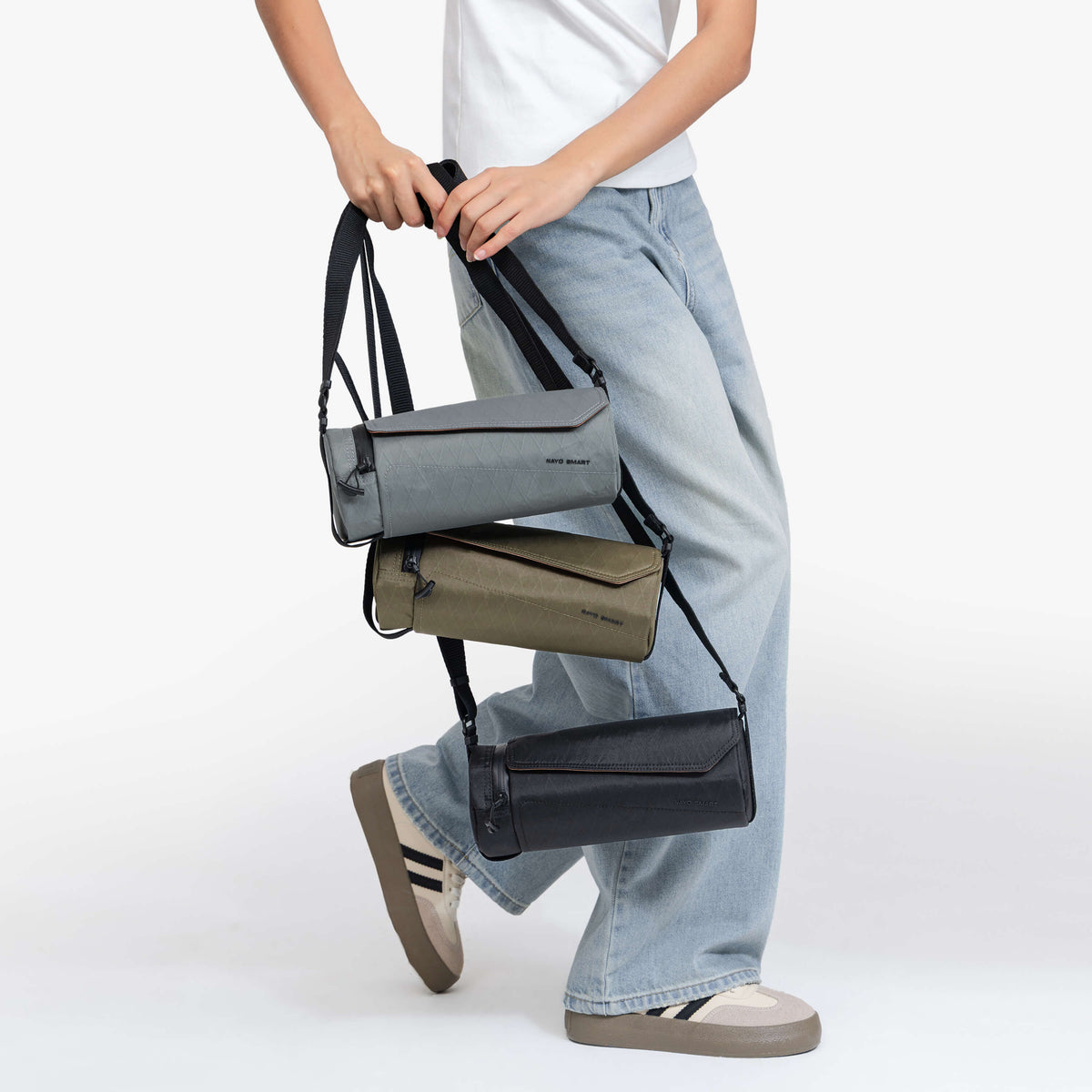
UL5 is made for those who prefer to carry just the essentials and keep things light.


Young man leaning on hotel bar counter carrying Nayo Smart UL5 cylinder crossbody bag, light gray cylindrical sling bag for casual daily outings


None of them is necessarily better than the others.

They simply fit different lifestyles.

What Really Makes People Switch Bags Is Often a Collection of Small Frustrations

People rarely abandon a bag because of one dramatic flaw.

More often, it’s a collection of small frustrations that slowly adds up.

You have to dig around for your keys every day.

You need to move other things out of the way just to get your laptop.

Everything becomes disorganized once you put it inside.

Your shoulders start feeling tired after a long commute.

You leave work and suddenly need to carry something extra, but there’s no room.

None of these problems seems serious on its own.

But when they happen every day, they eventually lead to a very simple result:

You stop wanting to carry the bag.

Man waiting on subway platform with overstuffed backpack, comic speech bubbles showing messy bag, shoulder pain and overloaded storage problems

That’s why the long-term experience of a bag usually isn’t defined by one standout feature.

It’s defined by all those small moments that happen every day.

Good Design Reduces the Small Frictions You Repeat Every Day

The best design doesn’t constantly remind you that it has a feature.

It simply makes things easier.

Your essentials have a place, so you don’t have to search.

You can reach what you need quickly, so you don’t have to dig.

You have enough room when your day changes, so you don’t have to switch bags.

You can carry it throughout the day without constantly thinking about it.

These experiences may seem small, but they shape your habits over time.

Eventually, you don’t feel like you’re using a product with a complicated design.

It just feels natural.

And that may be the real reason a bag stays with you for years.

One Bag Doesn’t Have to Work for Everyone

Backpacks today are increasingly designed to be “all-in-one.”

Work, travel, exercise, commuting, outdoor activities — it can feel like one bag is expected to do everything.

But in real life, more versatility doesn’t always mean a better experience.

Everyone’s routine is different.

Some people carry laptops and documents every day. Some move around the city by bike. Others only need a few personal essentials.

Instead of searching for one bag that solves every possible problem, it may make more sense to find one that solves the problems you actually encounter most often.

When a bag matches your habits, you’re less likely to leave it sitting in the closet just because it doesn’t fit one particular situation.

Before Buying a Bag, Look at Your Actual Day

If you don’t want your new bag sitting unused a few months from now, start by looking at how you actually live.

What do you really carry every day?

Which items do you reach for most often?

Where do you usually work on your laptop?

Does your commute change throughout the week?

Does your weekday routine look completely different from your weekend?

How much capacity do you really need?

These questions are often more useful than simply asking how many features a bag has.

Because when we buy a bag, it’s easy to make the decision based on the life we imagine.

But the bag will ultimately spend months following the life we actually live.

Conclusion: The Right Bag Should Feel Better the Longer You Use It

You may fall in love with a bag because of the way it looks.

After a few months, what keeps you reaching for it are the details you experience every day:

Easy to access. Easy to organize. Comfortable to carry. And adaptable enough to fit the way your life moves.

So if you love a bag when you first buy it but stop carrying it a few months later, it doesn’t necessarily mean the bag is bad.

It may simply mean that once the novelty faded, you started noticing the distance between the bag and your real life.

The right bag doesn’t need to remind you every day how special it is.

You simply reach for it naturally whenever you walk out the door.

最新記事

このセクションには現在コンテンツがありません。サイドバーを使ってこのセクションにコンテンツを追加してください。