

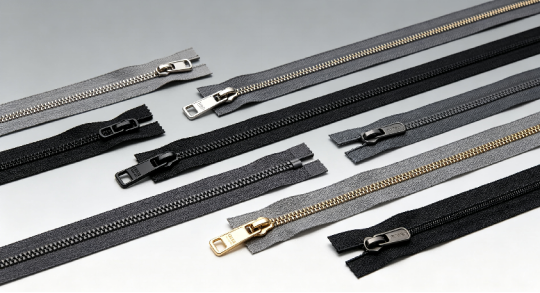
When buying a backpack, you might first look at capacity, materials, laptop compartments, carrying systems, and storage organization.
But there is one component that gets used repeatedly every single day and is often overlooked—the zipper.
A backpack may be opened dozens of times a day: to take out your laptop, grab your earbuds, store a charger, retrieve your passport, or put away a water bottle. All of these seemingly simple actions depend on zippers.
Because zippers are used so frequently, they can have a surprisingly significant impact on your everyday experience.
That is one reason why we often see professional zipper brands such as YKK used in commuter backpacks, travel bags, outdoor gear, and EDC backpacks.
So, what makes YKK zippers so good? And how much can a zipper actually affect the experience of using a backpack?
The answer is not simply “durability.”
What really matters is how a zipper affects smoothness, durability, protection, operating efficiency, and long-term usability.
1. What Is YKK? Why Is It So Commonly Used in Premium Backpacks?

YKK is a zipper brand under the Japanese YKK Group. The name YKK comes from Yoshida Kogyo Kabushiki Kaisha.
From clothing and footwear to outdoor equipment, luggage, and backpacks, YKK products are widely used across many industries.
However, one point should be made clear:
YKK does not automatically mean a backpack is premium.
Simply using a YKK zipper does not, by itself, prove that an entire product is of higher quality.
The real advantage lies in YKK's mature manufacturing system, extensive range of specifications, and product series developed for different applications and environments.
For backpacks, this is particularly important.
Different zipper locations have different requirements:
- The main compartment needs to withstand greater opening pressure.
- The laptop compartment may be opened frequently throughout the day.
- A quick-access pocket prioritizes operating speed and convenience.
- An outdoor backpack may place greater emphasis on water resistance.
- A hidden pocket needs to balance accessibility with security.
Therefore, a truly well-designed backpack is not simply one that “uses YKK.”
It is one that selects the right zipper for the right application and integrates it properly with the overall bag structure.
2. Why Can a Zipper Directly Affect the Backpack Experience?
The most important value of a zipper is not how premium it looks, but whether you can barely notice it when using it every day.
A good zipper should allow you to:
Open naturally, close smoothly, and operate reliably.
On the other hand, if a zipper frequently catches, offers inconsistent resistance, or has a pull that is difficult to grip, every interaction with the bag becomes slightly more complicated.
For example:
You are at the airport and need to quickly take out your laptop.

You are sitting in a café and want to grab your charger.
You are walking down the street and need to take out your phone.
These are all simple situations.
But if the zipper is difficult to use, you may need to stop, change hands, stabilize the bag, or adjust the zipper repeatedly.
Each instance may only take a few extra seconds.
But when repeated dozens of times a day over months or even years, these small inconveniences can become a noticeable difference in the overall experience.
In this sense, a good zipper helps a backpack:
Reduce the number of steps and minimize friction during everyday use.
3. A Truly Good Zipper Should Feel Smooth First
When people first experience a well-made backpack, the most noticeable thing may not be how much storage space it has.
It may simply be:
“This zipper feels really smooth.”
It is a very direct product experience.
Under normal conditions, a high-quality zipper should provide a relatively consistent operating experience:
When opening, the resistance should remain relatively even without requiring you to constantly adjust the angle.
When closing, the zipper teeth should engage reliably without obvious catching or snagging.
During quick operations, even when operated with one hand, the zipper should remain easy and consistent to use.
Of course, zipper smoothness is not determined by the zipper brand alone.
Zipper specifications, zipper pulls, the curvature of the bag, material thickness, sewing techniques, and internal loading pressure can all affect the final experience.
That is why high-quality backpack design is not simply about sourcing a “good zipper.”
It is about ensuring that the zipper and the overall bag structure work well together.
4. A Zipper Does More Than Open and Close a Bag—it Also Affects Durability
Backpack zippers actually work harder than you might think.
They have to deal with two major challenges:
Frequent opening and closing + pressure from the contents of the bag.
Once a backpack is loaded with a laptop, clothing, water bottle, chargers, and other belongings, the contents naturally create outward pressure against the bag.
The zipper needs to continue functioning properly even when the bag is under greater load.
If the zipper specifications, zipper teeth, slider, and bag structure are not properly matched, long-term use may result in:
Zipper catching or snagging
Deformed zipper teeth
Worn zipper pulls or sliders
Increased opening and closing resistance
Excessive pressure on the zipper track
Therefore, when evaluating whether a backpack is durable, you should not only look at how thick the outer material is.
The interaction between the zippers, stitching, bag structure, and hardware is equally important.
That is why mature backpack design treats the zipper as part of the overall structure rather than simply an individual component.
5. Why Are Zippers Especially Important for Water-Resistant Backpacks?

When people talk about water-resistant backpacks, the first thing they usually think about is the fabric.
But in reality:
Water-resistant fabric does not mean the entire backpack is completely waterproof.
A backpack has multiple potential entry points for water, including:
Material seams, stitching areas, external pockets, and zipper openings.
Among these, the zipper is an especially important opening structure.
A standard zipper is not inherently designed to create a completely sealed barrier. Therefore, backpacks that emphasize water protection may use water-resistant zippers, laminated constructions, or zipper flaps to reduce the possibility of water entering through the opening.
For example, YKK's AquaGuard series is widely used in outdoor equipment, travel bags, and technical products.
But there is another important point to keep in mind:
A water-resistant zipper does not mean the entire backpack is completely waterproof.
The overall protective performance of a backpack also depends on the fabric, stitching, construction, seams, and opening design.
So if you frequently commute, cycle, or spend time outdoors, don't only look at whether the backpack uses water-resistant fabric.
You should also ask:
How is the zipper area protected?
6. The Zipper Pull and Locking Structure Also Affect the User Experience
Beyond the zipper teeth themselves, there is another component that is often overlooked:
The zipper pull.
During everyday use, the zipper pull is the part your fingers actually interact with.
Therefore, a well-designed zipper pull should be:
- Easy to grip
- Resistant to slipping
- Convenient to operate with one hand
- Visually and structurally compatible with the backpack
Functional backpacks can also take things a step further by incorporating a locking mechanism into the zipper pull.
Nayo Smart H2 is a good example.
At the top rear section, the H2 uses a YKK semi-automatic locking zipper pull.
Once the zipper is pulled all the way to the top, the zipper pull can lock into place, helping prevent it from unintentionally sliding open as the bag moves during everyday walking or commuting.
It may seem like a small detail, but it can be surprisingly useful in daily life.
For example:
After placing your phone, wallet, earbuds, or charging accessories inside the backpack, you can move around the city without constantly worrying that the zipper might gradually slide open as the bag moves.
Of course, this does not replace a professional anti-theft lock, nor does it mean the backpack provides absolute theft protection.
However, this semi-automatic locking structure can provide an additional layer of protection for the contents inside.
This is a classic example of thoughtful backpack design:
Not adding complexity for the sake of adding features, but using a small structural detail to reduce a real-world risk.

7. Why Should Different Parts of a Backpack Use Different Zippers?
A well-designed backpack does not necessarily use exactly the same zipper for every pocket.
That's because different storage areas have different functional requirements.
Main Compartment
It usually needs a larger opening and stable operation while also taking into account the pressure created when the bag is fully loaded.
Laptop Compartment
Since laptops may be removed and stored frequently, smoothness, stability, and easy access become particularly important.
Quick-Access Pocket
Phones, earbuds, keys, and other small items are often accessed repeatedly, so fast opening and closing become priorities.
Hidden Pocket
It may be used less frequently but places greater emphasis on discretion and security.
Protective Opening
For water-resistant designs, the zipper needs to work together with the overall rain and splash protection structure.
So:
A good backpack is not one with the most zippers. It is one where every zipper has a clear purpose.
If a backpack has numerous pockets but makes you search through multiple zippers every time you need something, “more storage” can actually increase the cost of using the bag.
A truly mature design should make sure:
Every function is clear, and every item is naturally accessible.
8. What Should You Look for in YKK Zippers When Choosing a Backpack?
So, the next time you buy a commuter backpack, travel backpack, or EDC backpack, consider adding zippers to your evaluation checklist.
Here are a few simple things to look at:
① Look at the brand, but don't look at the brand alone
If a product uses YKK or another professional zipper brand, it can be a useful quality reference.
But don't simply assume:
YKK = premium backpack.
The specific zipper series and specifications matter just as much.
② Open and close it several times
Test the main compartment and front pockets and pay attention to how smoothly they operate.
③ Test it when fully loaded
A zipper that feels smooth on an empty bag may behave differently when the backpack is packed.
Put in a laptop, clothing, water bottle, or other items and test it again.
④ Try one-handed operation
This is especially important for quick-access compartments.
If you can naturally open and close the zipper with one hand, it is generally better suited to frequent everyday use.
⑤ Look at the zipper position
Is the zipper easy to find?
Could it be blocked by the shoulder straps, your clothing, or another structural element?
⑥ If water resistance matters, examine the zipper construction
Don't just look at whether the fabric is water-resistant. Check whether the zipper area has additional protection.
Q&A: What Else Should You Know About YKK Zippers?
Q1: Are YKK zippers really better than regular zippers?
YKK has a mature manufacturing system and a broad range of products, which is why its zippers are widely used in products where stability and durability are important.
However, actual performance still depends on the specific zipper series, specifications, bag construction, and usage conditions.
Q2: Is YKK AquaGuard completely waterproof?
No.
AquaGuard is primarily designed to improve water resistance around the zipper area.
Whether a backpack has strong overall water protection depends on multiple factors, including the fabric, stitching, seams, construction, and overall opening design.
A water-resistant zipper does not mean the entire backpack is completely waterproof.
Q3: Why does a backpack zipper sometimes become harder to pull over time?
Common causes include accumulated dust and debris, deformed zipper teeth, worn zipper pulls or sliders, prolonged overloading, and excessive pressure on the zipper track.
If a zipper starts catching, check for foreign objects or debris first. Avoid forcing it, as this can cause further damage.
Q4: Is a backpack with more zippers better?
Not necessarily.
What matters is not the number of zippers, but:
Whether each zipper solves a real storage or usability problem.
Conclusion: A Small Zipper Can Have a Big Impact on Everyday Use
A zipper may be just one small component of a backpack, but it handles a huge number of high-frequency interactions.
It affects far more than simply whether a compartment can be opened.
It can influence:
Smoothness, operating efficiency, durability, protection, and long-term usability.
YKK is widely used by backpack brands not because the name “YKK” automatically means premium, but because professional zipper systems can provide mature solutions for different applications and usage scenarios.
And designs like the Nayo Smart H2 take this idea one step further:
A truly good backpack is not about assembling expensive components. It is about making every detail serve a real-world use case.
When a zipper opens smoothly, closes securely, stays in place during movement, and works seamlessly with the backpack's protective structure, you may not even notice it.
And that is precisely what good design is supposed to do.
A truly great backpack shouldn't make you think about it every day. It should simply make every opening, every grab, every packing moment, and every departure feel more natural.
Share:
Why Does a 20L Backpack Sometimes Feel Like a 30L Bag? What Really Determines Carrying Capacity Beyond Liters?
Are Waterproof Backpacks Really “Waterproof”? What’s the Difference Between Water-Resistant and Waterproof?