

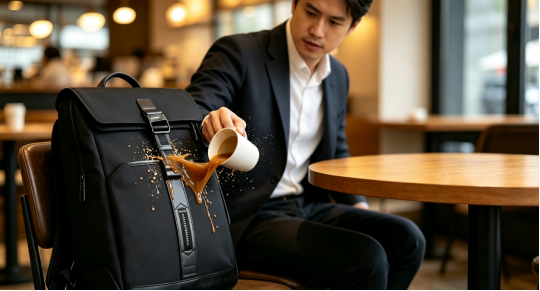
An urban backpack faces all kinds of daily tests: sudden light rain on your way out; a few coffee splatters while working in a café; scuffs against subway seats or walls; dust and dirt picked up on the bottom after being set on the ground on the way home. These are not extreme outdoor scenarios, but common realities for city dwellers.
For this reason, more and more backpacks highlight fabric protective performance. Product pages often feature WaterRepellent, OilResistant and StainResistant, and many items list all three. Many people wonder: does waterrepellent equal waterproof? What is the difference between oilresistant and stainresistant? Is a backpack with all three protections automatically more durable?
In fact, each feature solves distinctly different problems. For city users commuting, working in cafés and taking short trips, heavyduty outdoorgrade backpacks are often unnecessary. What matters more is resistance to everyday water spills, oil stains and dirt, paired with light weight, comfort and easy maintenance. Instead of chasing maximum protection blindly, understand what each fabric treatment does and pick based on your lifestyle.
1. What are the differences between waterrepellent, oilresistant and stainresistant?
These terms frequently appear together in product descriptions, yet they target different issues. They represent three independent directions of protection rather than hierarchical grades.
Waterrepellent: against water droplets and light rain
Waterrepellent describes how fabric interacts with water. When raindrops or splashes hit waterrepellent treated fabric, water beads up and rolls off instead of soaking rapidly into the weave. This works well for city commutes: light rain on the walk to the subway or spilled drinks in cafés are slowed from seeping into the backpack.
Suitable scenarios: daily urban commutes, short outdoor exposure, light rain, liquid splashes, moving between offices and cafés.
Important distinction: Waterrepellent ≠ Waterproof. It is only surfacelevel protection and cannot withstand prolonged soaking or heavy continuous rain.
Oilresistant: against coffee and oily liquids
Water and oil behave very differently on fabric. Coffee, cooking oil, skincare products and some sugary drinks can leave stubborn marks on ordinary fabric. Oilresistant treatment reduces the chance oily substances stick to or penetrate the material.
This brings high practical value for people moving between cafés, restaurants and offices. Minor spills of coffee happen far more often than heavy rain. Oilresistance cannot guarantee zero marks, but it lessens oil contamination and makes later cleaning much easier.

Stainresistant: fighting dust and hardtoclean marks
Stainresistance addresses not only liquid spills but also dust, mud and marks from friction. Dirt picked up from rubbing against seats, resting on floors or leaning against walls falls into this category. Stainresistant treatments reduce stain adhesion, help keep the backpack looking clean daytoday and lower barriers for wiping and maintenance.
2. Why do everyday backpacks need comprehensive fabric protection?
In reallife situations, stains tend to occur in combination. You may encounter light rain in the morning, spilled coffee at noon, scuffs on public transit in the afternoon and dust on the base by evening. Water, oil and dirt can test your backpack fabric all within one day.
Urban backpacks do not need one single overamplified performance metric. Balance is key: waterrepellent properties handle unexpected light rain; oilresistance defends against beverage spills; stainresistance copes with dust and friction in city environments. Combined, they cover most urbanuse cases.
When evaluating a city backpack, do not rely on one marketing keyword alone. Focus on whether its fabric protection covers most situations you actually encounter.
3. How is fabric protective performance achieved?
Seeing labels for waterrepellent or stainresistant, many assume a special magical raw material is used. A backpack’s protective performance comes from three factors: fabric weave structure, surface treatment, and coatings or composite layers.
Fabric weave structure
Fibre type fabric density and weaving pattern all affect final performance. Weave structure determines how fast liquids penetrate, alongside abrasion resistance, weight and hand feel. Two backpacks made with Nylon can deliver very different protective results. Material name is only basic information.
Surface treatment
Extra surface treatments alter surface tension so water and certain liquids do not soak into fabric quickly. However surface treatments degrade with realworld use. Friction, cleaning, dust, UV rays and longterm wear can change surface performance over time.

Coatings and composite structures
Added coatings and composite films boost protection but bring downsides: increased weight, stiffer fabric, reduced breathability and higher production costs.
More complex protective structures do not always mean better performance. Suitability for your usage environment matters most.

4. Does stronger protection mean a better backpack?
Not necessarily. This is a common purchasing misconception.
If your daily routine runs: home → subway → office → café → home, you only need fabric handling routine splashes, dust and minor stains. Buying a heavyduty outdoor backpack for rare heavy rain events forces you to carry extra weight every day. You may sacrifice cityfocused benefits such as light weight, soft texture, organised storage, appearance and carrying comfort.
Ask yourself: what do I actually face daytoday? Do not chase maximum specs. For urban users, adequate, wellmatched protection beats extremegrade performance.
5. Why are oilresistance and stainresistance particularly important for city users?
Most shoppers prioritise capacity, laptop compartment and shoulder straps. Yet with daily heavy use, one practical question arises: how quickly will this backpack get dirty?
Citylife sources of dirt are numerous: setting the backpack under café tables, leaning it against restaurant chairs, contact with objects on public transit, placing it temporarily on airport floors, or leaving it in hotel rooms and train carriages. None of these immediately damage the backpack, yet appearance degrades over time. Marks show up especially clearly on lightcoloured backpacks.
Stainresistance is not just a premium marketing feature; it delivers tangible benefits for highfrequency use.
Oilresistance is also not limited to kitchen or outdoor scenarios. Coffee, skincare products, food and drinks are common sources of oily stains in cities. Oilresistant fabric is especially valuable for people who work regularly in cafés or carry drinks around.
6. How to read fabric specifications when buying a backpack
Distinguish terminology: tell waterrepellent apart from waterproof, as these performances cannot substitute one another.
Check fabric composition: confirm whether the material is Nylon, Polyester, Cordura or composite fabric, and note if coatings or surface treatments are applied.
Refer to official intendeduse positioning: brand descriptions for commuting, travel, cycling or outdoor use offer more insight than material names alone.
Read care instructions: check cleaning requirements. Maintenance difficulty shapes longterm experience for heavily used daily backpacks.
7. How to choose based on different lifestyles
No single fabric works perfectly for everyone. Choose according to your realworld usage patterns.
If you are mainly an urban commuter Moving between offices, subway, buses and cafés, waterrepellent plus stainresistant and easytoclean properties satisfy most needs. Professional outdoorgrade waterproof construction is often unnecessary.
If you frequently work from cafés Prioritise oilresistance and stainresistance. Coffee, drinks and tablesurface contact create more risks than heavy rain. Easytoclean fabric brings highfrequency practical value when you regularly bring your laptop and backpack into cafés.
If you cycle regularly Cycling conditions are more complex. Besides rain, you face winddriven rain spray and road mud splashes. Do not look only at fabric performance. Pay close attention to zippers, top openings, seams, carrying stability and overall waterproof construction.
If you travel often Backpacks encounter airports, hotels, public transit, city streets and occasional outdoor exposure during travel. Instead of maximising one single feature, seek balanced tradeoffs between protection, capacity, weight and comfort.
8. Why do the H1 and Herman HL1 suit different users despite sharing the same fabric?
Fabric is only one component of a backpack. Even with identical fabric, differences in form factor, capacity, organisation and intendeduse create completely different user experiences.
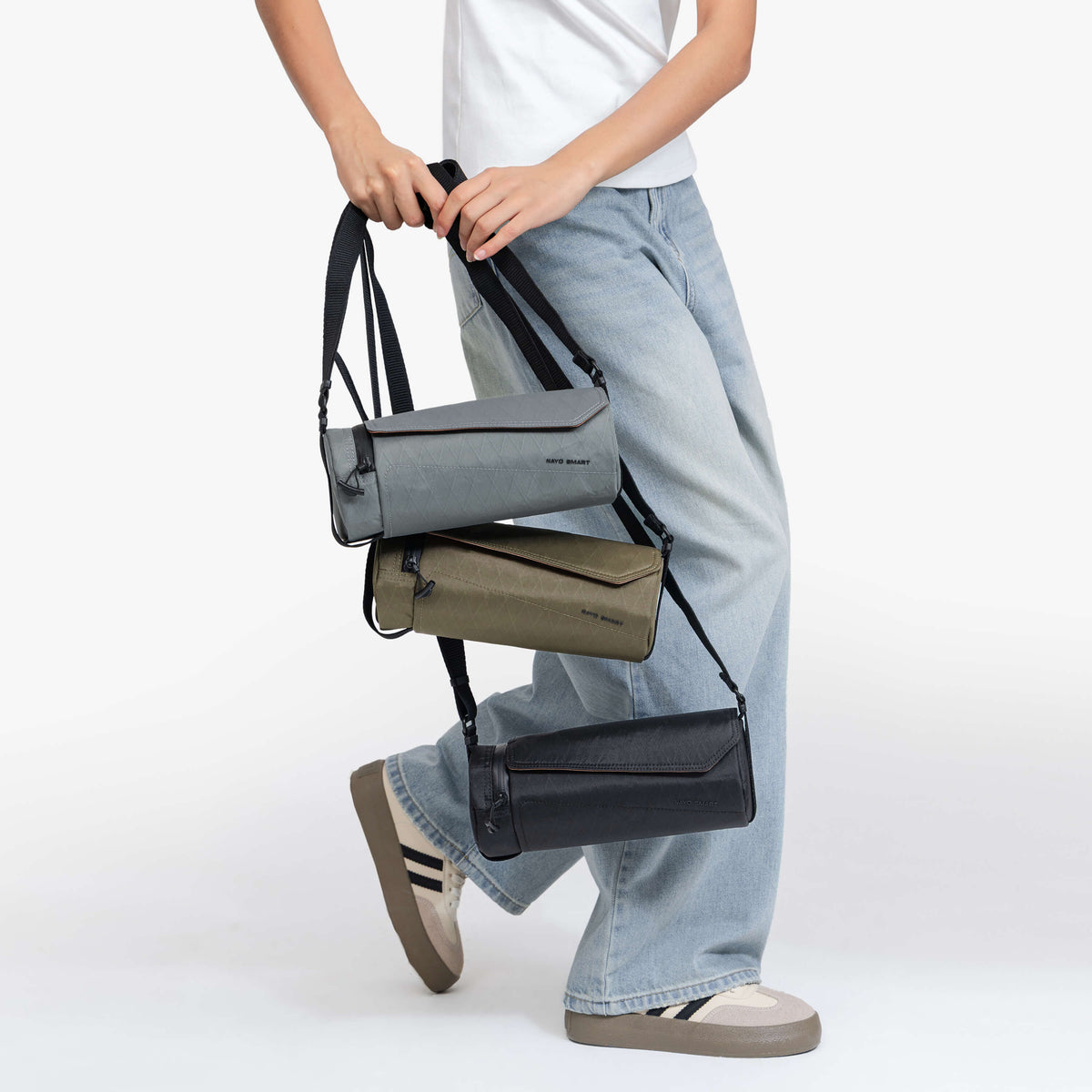
NAYO SMART H1 and Herman HL1 serve as a good example. Both use NATEX fabric with oilrepellent, stainresistant and waterrepellent properties. Comparing fabric alone, neither offers superior protection. The real difference lies in what you carry and how you prefer to carry it.
NAYO SMART H1 (Backpack)

It targets commuters and office users carrying many items: laptops, tablets, documents, chargers, digital accessories and daily personal belongings. Its value comes from large capacity, multicompartment organisation and complete carrysystem, suited for office commutes, café work and short trips. Its advantage is not stronger fabric protection, but loadcarrying capability and carrying comfort. It fits users who carry both work gear and daily necessities.
Herman HL1 (Sling bag)

Built with the same NATEX fabric and baseline protection, it focuses on lightweight EDC. It is designed for users without full office gear, carrying only small essentials: phone, wallet, earphones, power bank, passport and compact accessories. For city exploration and lightduty outings, the slingbag format enables quick access and reduces physical burden.
Comparison table
|
Comparison item |
||
|
Fabric |
NATEX |
NATEX |
|
Protective baseline |
Waterrepellent, oilresistant, stainresistant |
Waterrepellent, oilresistant, stainresistant |
|
Form factor |
Backpack |
Sling bag |
|
Core scenarios |
Commuting, office work, short trips |
Urban EDC, casual lightweight outings |
|
Typical contents |
Laptop, documents, electronics, daily supplies |
Phone, wallet, earphones, power bank and other small items |
|
Key strengths |
Large capacity, comprehensive organisation, comfortable carry |
Lightweight, bodyworn convenience, fast item access |
|
Recommended users |
People carrying substantial daily gear |
Users seeking minimal carry burden |
Identical fabric does not equal identical product experience. Fabric delivers baseline protection; product structure shapes your daytoday user experience.
9. Beyond fabric: other key points for backpack selection
Do not focus exclusively on fabric protection when shopping for an everyday backpack. Longterm satisfaction depends on multiple details working together.
Weight For daily travel, total weight directly creates shoulder and back fatigue. Lightweight design matters greatly if you commute for long stretches.
Carry system Shoulderstrap width, padding, backpanel structure and overall fit define comfort. A backpack with excellent fabric performance but poor wearability will rarely become your daily goto.
Storage organisation Wellthoughtout compartment layout for laptops, chargers and small accessories can improve experience more than marginal gains in fabric protection.
Quickaccess design Convenient access to frequentlyused items such as phones, earphones, keys and wallets heavily impacts daily efficiency.
Ease of maintenance Stainresistant fabric is not maintenancefree. Choose materials that are simple to clean to lower longterm upkeep hassle.
10. Which protective feature should you prioritise?
Use the reference below for quick decisionmaking.
|
Usage scenario |
Priority performance |
|
General urban commute |
Waterrepellent |
|
Subway / bus commute |
Waterrepellent + stainresistant |
|
Cafébased work |
Stainresistant + oilresistant |
|
Frequently carrying coffee or drinks |
Oilresistant + stainresistant |
|
High concern for cleanlooking appearance |
Stainresistant |
|
Regular exposure to light rain |
Waterrepellent |
|
Cycling |
Highergrade overall waterproof construction |
|
Prolonged outdoor activities |
Waterproof |
|
Business travel |
Protection + organisation + comfort |
|
Lightweight daily EDC |
Stainresistant + easytoclean + lightweight |
There is no need to sacrifice overall practicality chasing one single spec. Most city dwellers want a backpack that performs reliably through ordinary days. For cycling or long outdoor trips, look beyond fabric and examine zippers, seams and overall waterproof construction.
The same NATEX fabric enables different solutions. The H1 combines protection with largevolume storage and ergonomic carrying for commuting and office use. The Herman HL1 applies the same protective fabric to a lightweight sling built for casual urban movement. When choosing a backpack, instead of asking which fabric is best, ask yourself what realworld conditions you encounter every day.
Good fabric does not make a backpack permanently spotless. Its value lies in helping your backpack cope gracefully with unavoidable light rain, coffee spills, dust and everyday friction.
Q&A
1. Do new backpacks need special preuse care?
Generally no extra treatment is required. If factoryapplied fabric treatments are already in place, use the backpack normally following brand guidance. Do not apply aftermarket waterrepellent or stainrepellent sprays unless the brand explicitly confirms compatibility with the fabric.
2. Are stainresistant fabrics especially suitable for people wearing lightcoloured clothing?
Stainresistant fabric reduces surface soiling on the backpack itself, with no direct connection to your clothing colour. If you often wear lighttoned outfits, pay attention to colour transfer risk, frictionmark potential and how easy the backpack is to clean.
3. Can dried oil stains on a backpack still be cleaned?
Cleanup is possible but success rates are higher when addressed early. Oil stains grow more bonded to fabric over time. Always follow official care instructions. Avoid strong degreasers, bleach or untested cleaning products.
4. Will regularly setting my backpack on office floors shorten fabric service life?
Repeated contact with rough, damp or dirty floors accelerates wear and soiling. Where possible place the backpack on chairs or table edges. The bottom panel receives the highest level of external contact.
5. Are oilresistant and stainresistant treatments the same as abrasion resistance?
No. Oilresistance and stainresistance govern how stains interact with fabric surfaces. Abrasion resistance depends on yarn quality, weave density, fabric thickness and build quality. A highly stainresistant fabric is not automatically highly abrasionresistant. For travel and outdoor use, evaluate both attributes.
6. Why do some backpacks clean easily without brandlabelled stainresistance?
Practical cleanability does not come solely from a “StainResistant” label. Fabric colour, surface texture and weaving pattern all influence how visible dirt becomes. Do not judge cleanability purely based on whether marketing copy mentions stainresistance.
Share:
Are Waterproof Backpacks Really “Waterproof”? What’s the Difference Between Water-Resistant and Waterproof?