

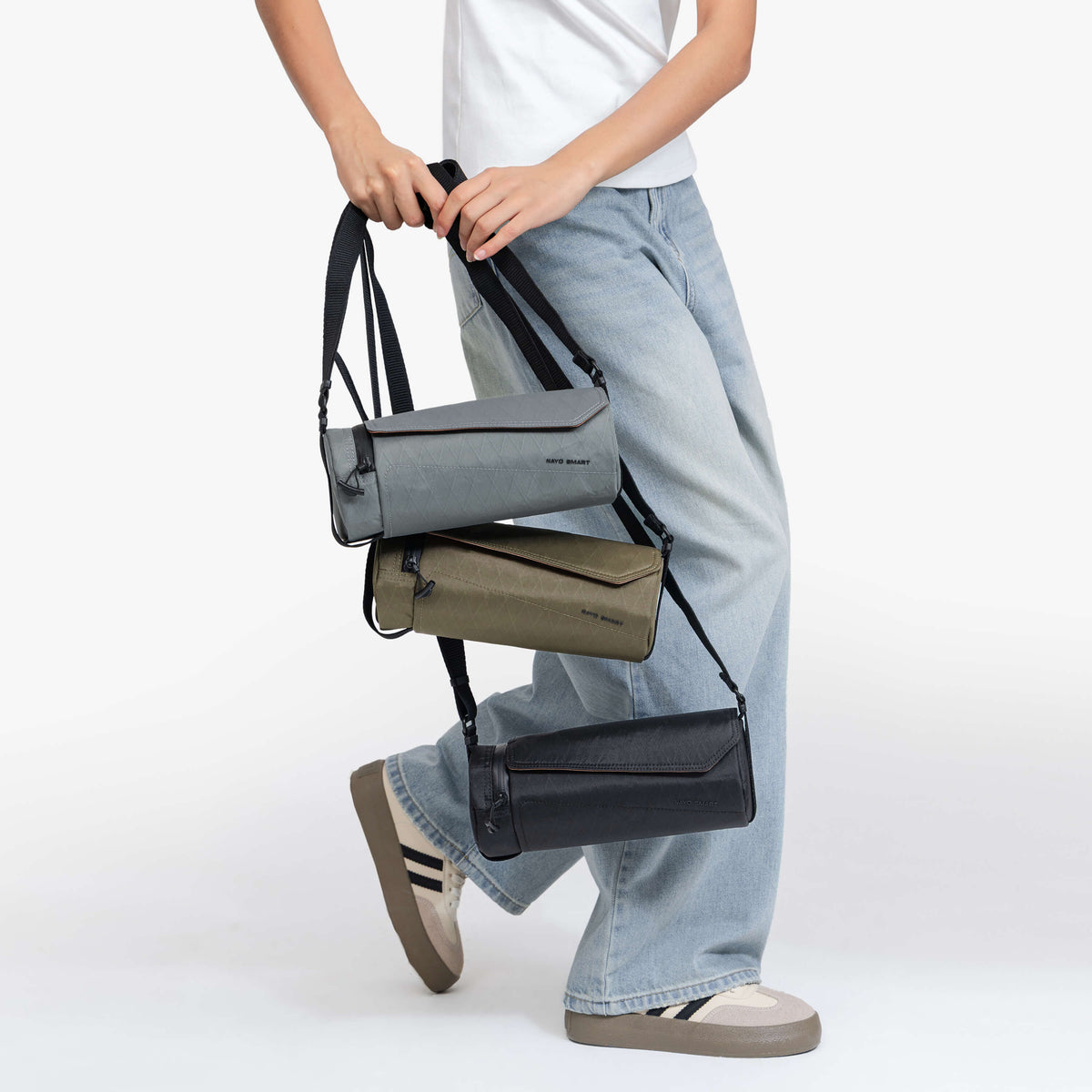
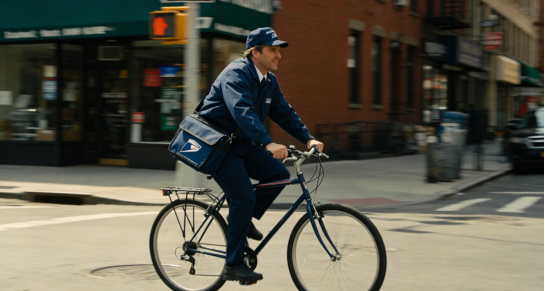
If you've ever seen a postal worker riding through the city with a large bag slung across their shoulder, you've probably seen the most classic form of the Messenger Bag.
With its wide flap, long shoulder strap, and close-to-body design, the messenger bag may look simple, but its design is remarkably well suited to urban mobility.
What makes it interesting is that the messenger bag we know today is no longer just a bag for carrying mail.
From essential equipment for postal workers, to an iconic piece of cycling culture, to a modern bag for commuting, café work, and urban exploration, the Messenger Bag has gone through a long evolution.
So, where did the messenger bag actually come from? And why has a bag originally designed for postal work remained relevant today?
1. Where Did Messenger Bags Come From?
The term Messenger Bag is closely associated with messengers—people responsible for delivering messages, documents, and mail.
Before modern delivery and logistics systems became widespread, the transportation of mail and documents depended heavily on people.
Postal workers might carry large quantities of letters, documents, and small packages throughout the day while constantly moving from place to place.
This created the need for a specific type of bag:
· Large enough to carry a substantial amount of mail
· Comfortable enough for extended carrying
· Designed to keep both hands free
· Easy to open and access
· Stable while walking or cycling
A traditional briefcase or handbag simply wasn't practical enough.
Over time, a bag design better suited to mobile work began to take shape.
Long shoulder strap + wide opening + flap + close-to-body carry
These elements eventually became some of the defining characteristics of the Messenger Bag.

2. Why Do Messenger Bags Use a Single Long Shoulder Strap?
This is one of the most recognizable characteristics of a messenger bag.
Unlike a backpack, a Messenger Bag typically uses a long shoulder strap that allows the bag to sit diagonally across one side of the body.
This design isn't simply about appearance.
For people who need to stay mobile and access their belongings frequently, a single shoulder strap offers several practical advantages.
Quick Access
When a postal worker needed to retrieve a letter or document, there was no need to completely remove the bag.
The bag could simply be moved toward the front of the body, allowing the flap to be opened and the contents accessed quickly.
Keeping Both Hands Free
Both hands could remain available for:
· Riding a bicycle
· Carrying other items
· Opening doors
· Using a phone
· Handling other tools
Better for Urban Mobility
Keeping the bag close to the body can help reduce excessive movement while walking or cycling.
This is also one of the reasons Messenger Bags eventually became closely associated with urban cycling culture.
3. Why Did Messenger Bags Become Associated with Cycling Culture?
As urban cycling culture developed, Messenger Bags gradually moved beyond traditional postal work and became part of a broader urban lifestyle.
For cyclists, backpacks aren't the only option.
While backpacks provide stability, accessing their contents often requires more movement.

A Messenger Bag, on the other hand, allows you to:
Keep both hands free + access your belongings quickly + keep the bag close to your body.
This combination made it particularly practical for urban cyclists.
As a result, the Messenger Bag gradually became an iconic piece of cycling culture.
Its identity began to evolve:
Postal Work
↓
Urban Cycling
↓
Urban Lifestyle
Messenger Bags started appearing on photographers, designers, students, creative professionals, and everyday urban commuters.
4. Why Are Messenger Bags Still Popular Today?
Our way of working has changed, but the need to stay mobile hasn't disappeared.
Postal workers once carried:
· Letters
· Documents
· Small packages
Today, urban professionals may carry:
· Laptops
· Tablets
· Chargers
· Mice
· Notebooks
· Earbuds
· Power banks
· Water bottles
The items have changed, but the underlying need is surprisingly similar.
We still need to carry our essential tools while moving through the city.
This is one of the reasons modern Messenger Bags have become relevant again.
With the rise of Hybrid Work, Remote Work, and Digital Nomad lifestyles, work is no longer limited to a traditional office.
A typical day might look like:
Home → Café → Coworking Space → Office
This kind of lifestyle requires a bag that can move with you from one environment to another.
5. How Are Modern Messenger Bags Different from Traditional Ones?
Modern Messenger Bags are no longer simply large bags designed to carry as much as possible.
One of the biggest changes is their internal organization.
Traditional messenger bags focused more on:
How much can it carry?
Modern messenger bags increasingly focus on:
Where should everything go, and how quickly can you access it?
That's why modern designs often include:
· Dedicated Laptop Compartment
· Tablet Compartment
· Digital Device Organization
· Quick-Access Pocket
· Hidden Pocket
· Cable Organization
· Water Bottle Storage
This evolution has transformed the Messenger Bag from a simple carrying tool into a Mobile Work Bag.
6. Nayo Smart UL3: A Messenger Bag Designed for Modern Urban Mobility
If you like the classic crossbody design of a Messenger Bag but also need to carry a laptop and other digital devices, a traditional messenger bag may no longer be enough.
That's where the Nayo Smart UL3 comes in.
It keeps the mobility and quick-access advantages of a classic Messenger Bag while adding the digital organization needed for modern mobile work.
It's essentially:
A Messenger Bag Designed for Modern Mobile Work.
The UL3 is well suited for:
· Urban commuting
· Café work
· Hybrid Work
· Digital Nomads
· Short trips
· Everyday Carry
· Urban exploration
1. Dedicated Tech Compartment: Keep Your Laptop Separate
One of the biggest changes in how we use messenger bags today is that:
Laptops have become everyday essentials.
The UL3 features a dedicated tech compartment / Laptop Compartment that can accommodate:
Up to a 14-inch laptop
while also supporting:
A 12.9-inch tablet.
The value of a dedicated compartment isn't simply that it can hold a laptop.
More importantly, it keeps your laptop separate from chargers, water bottles, mice, keys, and other everyday belongings.
For people who carry a laptop every day, this dedicated space makes:
Protection, organization, and access
much easier.

2. More Than a Laptop Compartment: Your Mobile Workspace
A laptop is only one part of a modern work setup.
What often makes a work bag difficult to use is everything that comes with the laptop.
If all of these accessories are thrown into one large compartment, finding what you need can quickly become a small archaeological expedition.
The UL3 uses multiple storage areas to give your work accessories a more organized place.
So when you move from the office to a café, you don't have to empty the entire bag just to find one cable or accessory.
Open the bag, find what you need, and get back to work.
3. The Messenger Bag Advantage: Faster Access
This is one of the reasons Messenger Bags have remained relevant.
Compared with traditional backpacks, one of the biggest advantages of a Messenger Bag is:
Quick Access.
When the bag sits at your side, you can easily move it toward the front of your body.
For example, at a café:
Take out your laptop.
Open your laptop.
Grab your charger.
Start working.
You don't have to put the bag on the floor or repeatedly take it off your shoulders.
For people who frequently move between different environments, this style of access feels natural and efficient.
4. A Commuter Bag Built for Hybrid Work
Modern commuting doesn't always look like it used to.
It used to be:
Home → Office → Home
Now it might be:
Home → Coffee Shop → Meeting → Coworking Space → Dinner
Workplaces and everyday environments are constantly changing.
So a truly practical commuter bag needs to solve more than just office storage.
The real question is:
How do you carry your workday with you?
That's exactly how the UL3 is positioned.
It combines:
Laptop Storage + Digital Organization + EDC Storage + Messenger Bag Carrying Style
For people who work on the move, it can function as a personal mobile workspace.
5. Easier Than a Traditional Briefcase, More Capable Than a Small Sling Bag
When choosing a commuter bag, you will usually come across three main options.
Backpack
Pros:
· More balanced weight distribution
· Better suited for heavier loads
· More comfortable for extended carrying
Cons:
· Accessing your laptop can require more movement
· Some styles can feel more casual in formal settings
Traditional Briefcase
Pros:
· Professional appearance
· Well suited to formal work environments
Cons:
· More closely associated with traditional office settings
· Less flexible for moving through the city
Messenger Bag
Pros:
· Quick access
· Keeps both hands free
· Convenient for urban mobility
· More relaxed than a traditional briefcase
· More capable of carrying work equipment than a small sling bag
The UL3 sits at the intersection of these three categories.
It retains the flexibility of a Messenger Bag while adding the digital organization needed for modern mobile work.
6. Who Is the UL3 Designed For?
If your typical day looks like:
Home → Café
You need a laptop and work accessories but don't want to carry a large backpack.
The UL3 is a great fit.
Office → Meeting
You need quick access to your laptop, tablet, and work essentials.
The UL3 is a great fit.
Coworking Space → City
You move between different locations while carrying your complete mobile work setup.
The UL3 is a great fit.
Digital Nomad
Your workplace changes regularly, and you need to carry your "mobile office" with you.
The UL3 is a great fit.
It's not designed exclusively for traditional business professionals.
It's better suited to people who believe:
Work can happen anywhere.
7. The Next Chapter of the Messenger Bag: From Carrying Mail to Carrying Your Life
Looking back at the evolution of the Messenger Bag, its story is surprisingly interesting.
It was born from a very specific need:
To help postal workers move efficiently while carrying and delivering mail.
Then it became part of cycling culture.
Later, it entered everyday urban life.
Today, Hybrid Work, Remote Work, and Digital Nomad lifestyles have given it another new role.
The contents of the bag have changed.
From:
Letters → Documents → Laptop → Digital Devices
But the fundamental design philosophy has remained remarkably consistent:
Give people the freedom to move while keeping their essentials within easy reach.
That may be the real reason the Messenger Bag has become a classic.
It hasn't remained stuck in the past.
It has simply continued to evolve alongside the way we live.
FAQ: Frequently Asked Questions About Messenger Bags
Q1: Are Messenger Bags suitable for carrying laptops?
It depends on the design.
Traditional Messenger Bags may only have one large main compartment without dedicated laptop protection.
If you carry a laptop every day, it's better to choose a modern Messenger Bag with a dedicated Laptop Compartment and organized tech storage, such as the Nayo Smart UL3.
Q2: What size laptop can the Nayo Smart UL3 hold?
The UL3 features a dedicated tech compartment designed to accommodate up to a 14-inch laptop, while also supporting a 12.9-inch tablet.
Q3: What's the difference between a Messenger Bag and a Sling Bag?
Both are designed for crossbody carrying, but they typically serve different purposes.
A Sling Bag is generally smaller and better suited for EDC and lightweight everyday essentials.
A Messenger Bag usually offers greater capacity and stronger work-oriented organization, making it more suitable for documents, laptops, tablets, and other work equipment.
Q4: Is a Messenger Bag or backpack better for commuting?
If you need to carry a large or heavy load, a backpack usually provides better weight distribution.
If you prioritize quick access, flexible movement, and organized storage for laptops and work essentials, a Messenger Bag can be a better choice.
For short commutes, café work, and Hybrid Work environments, a modern laptop Messenger Bag can offer a highly flexible carrying experience.
Final Thoughts
More than a century later, the Messenger Bag no longer belongs exclusively to postal workers.
It traveled from the post office to the bicycle, from the bicycle to the city streets, and from the city streets into today's cafés, coworking spaces, and the everyday lives of digital nomads.
The messenger bag evolved because the way we move evolved.
We may no longer carry a bag full of letters, but we still need to carry our laptops, tablets, chargers, and everyday essentials as we move freely between different places.
That's what the Nayo Smart UL3 brings to the classic Messenger Bag.
It combines the familiar mobility of a traditional Messenger Bag with the features modern mobile work demands—including a dedicated tech compartment, laptop storage, and organized space for digital essentials.
From delivering mail to getting work done.
From the post office to the café.
The Messenger Bag hasn't gone out of style. It has simply found a new way to live.
Share:
Why Are More People Choosing Slow Travel in 2026?
What Is EVA Foam? Why Are More Laptop Backpacks Using It to Protect Devices?