

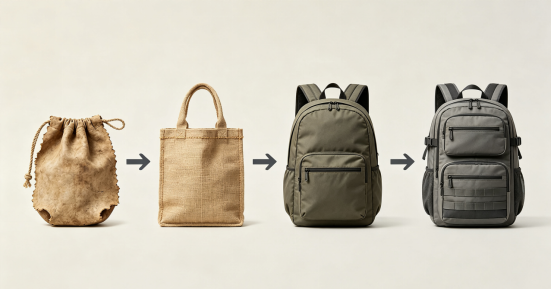
لفترة طويلة، كان يُنظر إلى حقائب الظهر على أنها أدوات بسيطة — حاويات مصممة لحمل الأغراض. ولكن عندما نستعرض تطورها، نكتشف أن كل ترقية رئيسية لم تكن تتعلق ببساطة بجعل حقائب الظهر تبدو أفضل. بل كانت استجابة للتعقيد المتزايد في أنماط حياة البشر.
مع دخول عام 2026، أصبح هذا التحول أكثر وضوحًا. تتطور حقائب الظهر من «أدوات حمل» بسيطة إلى أنظمة شخصية، فتؤدي تدريجيًا دورًا في إدارة سير عملنا وتقليل العبء المعرفي.
1. تطور حقائب الظهر: من أدوات حمل الأوزان إلى أنظمة نمط حياة متنقلة
①. المرحلة البدائية: أداة للبقاء (عصر ما قبل التصنيع)
كانت أقدم أشكال حقائب الظهر في الأساس:
حقائب من جلود الحيوانات
أكياس قماشية بسيطة
أنظمة حمل أساسية
كان الغرض منها واضحًا:
حمل الطعام والأدوات والأسلحة.
كان المنطق الأساسي لحقائب الظهر في هذه المرحلة بسيطًا:
احمل المزيد. احمل بسهولة أكبر. ابقَ على قيد الحياة.
لم تكن هناك حجرات، ولا لغة تصميم، ولا مفهوم للكفاءة.
②. العصر الصناعي: أدوات وظيفية (العصر الصناعي)
مع صعود المجتمع الصناعي، بدأت حقائب الظهر في تطوير تصاميم أكثر تنظيمًا:
حقائب ظهر مخصصة للتنزه
حقائب عسكرية
حقائب مدرسية
كان التغيير الرئيسي هو:
بدأ البشر يتحركون وفق أنماط أكثر قابلية للتنبؤ وتكرارًا.
أمثلة:
الذهاب إلى المدرسة
تسلق الجبال
العمليات العسكرية
ونتيجة لذلك، بدأت حقائب الظهر في تقديم:
الحجرة الرئيسية
أنظمة التثبيت الخارجية
هياكل التنظيم الأساسية
ومع ذلك، ظل الغرض الأساسي:
«احمل المزيد + تحمّل المزيد.»
③. عصر المعلومات: أدوات الحمل اليومي (العصر الرقمي)
مع انتشار الهواتف الذكية والأجهزة الرقمية، شهدت حقائب الظهر أول تحول كبير لها.

بدأ الناس في حمل:
أجهزة الكمبيوتر المحمولة
شواحن
أجهزة إلكترونية متعددة
الملحقات والكابلات
ظهر مفهوم الحمل اليومي (EDC) .
تغيّر دور حقيبة الظهر من:
«شيء يخزن الأغراض»
إلى:
«شيء يدعم الاستخدام اليومي المتواصل.»
ظهرت مشكلات جديدة:
كابلات متشابكة
الحاجة المتزايدة إلى حماية الأجهزة
متطلبات الوصول المتكرر
④. بعد عقد 2020: عصر الأنظمة
مع انتشار العمل عن بُعد وأنماط الحياة الحضرية متعددة السيناريوهات، قد ينتقل الشخص الآن بين:
المكتب
المقهى
مترو الأنفاق
رحلات العمل
النادي الرياضي
خلال يوم واحد.
بدأت حقائب الظهر تؤدي دورًا جديدًا:
محطة عمل متنقلة + نظام للتنظيم الشخصي
وهذا هو الأساس وراء انتشار حقائب الظهر ذات الأنظمة.
2. علم النفس وراء حاجتنا إلى حقائب الظهر ذات الهيكل
اختيار حقيبة الظهر ليس قرارًا جماليًا فحسب.
وعلى مستوى أعمق، يرتبط ذلك ارتباطًا وثيقًا بعلم النفس البشري وبكيفية إدارة أدمغتنا للمعلومات.
①. نظرية الحمل المعرفي
يُعدّ انتباه الإنسان وقدرته على اتخاذ القرارات موردين محدودين.
عندما تفتقر حقيبة ظهرك إلى الهيكل:
يصبح كل بحث قرارًا صغيرًا
يتطلب استرجاع كل غرض جهدًا ذهنيًا
في كل مرة تفتش فيها حقيبتك، ينقطع تركيزك
ومع مرور الوقت، يؤدي ذلك إلى:
إرهاق معرفي متراكم
مشكلات حقائب الظهر البسيطة:
عليك أن تتذكر مكان كل شيء
تعتمد بدرجة كبيرة على الذاكرة المكانية
يصبح التنظيم مهمة متكررة
قد تبدو بسيطة، لكنها تخلق عبئًا ذهنيًا خفيًا.
مزايا حقائب الظهر ذات الهيكل:
أماكن ثابتة
أماكن متوقعة
مسارات استرجاع تلقائية
الفائدة الحقيقية هي تقليل عدد القرارات التي تحتاج إلى اتخاذها.
②. الإحساس بالتحكم
تشير علم النفس إلى أن البشر يفضّلون بطبيعتهم البيئات التي تبدو قابلة للتنبؤ والتحكم على البيئات المفتوحة تمامًا لكنها فوضوية.
غالبًا ما توفّر حقائب الظهر البسيطة:
حرية
مرونة
عشوائية أعلى
توفّر حقائب الظهر ذات الهيكل:
إمكانية التنبؤ
إحساس بالنظام
الأمان
وهذا يفسر قول كثير من الأشخاص بعد الانتقال إلى حقيبة ظهر منظمة:
«لديها هيكل أكبر، لكنها تبدو أسهل في الاستخدام بطريقة ما.»
③. سيكولوجية النظام والمكافأة
عندما يرى الدماغ:
لكل غرض مكان محدد
يصبح كل شيء مرئيًا عند فتح حقيبة الظهر
بل تُنشئ استجابة مكافأة خفية.
وهذا ليس بالضرورة حماسًا أو متعة.
بل تنتج:
الاستقرار
اليقين
التحكم
وهذا أحد أسباب تحوّل حقائب الظهر ذات الهيكل إلى شيء «يصعب التخلي عنه».
3. من التفكير في الأداة إلى التفكير النظمي: كيف تغيّر منطق التصميم
①. المنطق القديم: التفكير في الحاوية
ركز تصميم حقائب الظهر التقليدي على:
ما مقدار ما يمكنها استيعابه؟
ما مدى متانتها؟
كيف تبدو؟
الكلمات المفتاحية:
السعة، الخامة، المظهر
②. المنطق الجديد: التفكير النظمي
يركز تصميم حقائب الظهر العصرية على:
هل تدفق المعلومات سلس؟
هل مسار الوصول مُحسّن؟
هل يمكن التنبؤ بمكان كل غرض؟
الكلمات المفتاحية:
الكفاءة، التدفق، الهيكل، النظام
4. الهيكل الأساسي لحقيبة الظهر ذات النظام (معيار 2026)
تتبع حقائب الظهر العصرية ذات الأنظمة عادةً أربع طبقات هيكلية:
①. طبقة النواة الرقمية
تتضمن:
حاسوب محمول
جهاز لوحي
شواحن
مركز الإنتاجية.
②. طبقة الوصول السريع
تتضمن:
إكسسوارات الهاتف
بطاقات المواصلات
سماعات أذن
تقلل وقت الوصول والحركات غير الضرورية.
③. طبقة التنظيم
تتضمن:
قرطاسية
أدوات صغيرة
إكسسوارات
تحافظ على تنظيم الأغراض اليومية وسهولة العثور عليها.
④. طبقة توسيع نمط الحياة
تتضمن:
زجاجة مياه
سترة
حاويات الطعام
تدعم التنقل طوال اليوم بين السيناريوهات المختلفة.
5. أمثلة على المنتجات: المنطق المنظومي وراء Nayo Smart Herman Pro
تستجيب علامات حقائب الظهر اليوم لهذا التحول نحو التفكير المنظومي بطرق مختلفة.
من خلال النظر في المنتجات النموذجية، يمكننا فهم كيفية ترجمة هذه الفلسفة إلى تصاميم حقيقية.
①. Nayo Smart Herman Pro: نظام إدارة الكفاءة الحضرية
بينما تكتفي بعض حقائب الظهر بتقسيم المساحة إلى حجرات، تركز Herman Pro على إنشاء نظام كفاءة شخصي للمحترفين العصريين.
إنه يجسّد فكرة تقليل العبء المعرفي من خلال التصميم المنظم.

تصميم فتح كامل على شكل حرف L بزاوية 180°
هذا ليس مجرد خيار جمالي.
إنها تحوّل بنية حقيبة الظهر التقليدية ذات «الثقب الأسود العميق» إلى مساحة عمل مسطحة ومرئية.
عند فتحها، تصبح أدوات عملك الأساسية ظاهرة على الفور.
لم يعد دماغك بحاجة إلى البحث عبر الذاكرة المكانية.
أكثر من 12 حجرة وظيفية وتخزين مخصص للتقنية
يتبع التنظيم نظامًا واضحًا:
طبقة النواة الرقمية → طبقة الوصول السريع → طبقة التنظيم اليومي
لمحوّلات الطاقة، والفأرات، والأقلام، والمستندات، وزجاجات المياه أماكن مخصصة جميعًا.
لكل شيء مكانه الخاص.
الفائدة النفسية
تمنح Herman Pro إحساسًا قويًا بالتحكم.
مع الاستخدام المتكرر، تصبح حركات الوصول إلى الأغراض تلقائية، ما يقلل الجهد الذهني الخفي أثناء:
التنقل داخل المدن
السفر بغرض العمل
الانتقال بين سيناريوهات متعددة
②. حقيبة الظهر اليومية من Peak Design: نظام المبدع الديناميكي
تتناول Peak Design حقيبة الظهر المتكاملة من منظور مختلف:
حماية المعدات عالية القيمة في بيئات متغيرة باستمرار.
صُمم للمصورين وصنّاع الأفلام والمبدعين، ويعمل كاستوديو متنقل للمعدات.
نظام فواصل FlexFold مستوحى من فن الأوريغامي
غالبًا ما يحمل المبدعون معدات بأحجام متغيرة باستمرار:
عدسات 70–200 مم
الكاميرات عديمة المرآة
الطائرات المسيّرة
المثبتات
تستخدم Peak Design فواصل مرنة مستوحاة من فن الأوريغامي.
المساحة الداخلية ليست ثابتة.
بل يمكن إعادة ترتيبها مثل المكعبات.

وصول سريع من الجانبين
بالنسبة إلى المصورين، لا يمكن للحظات أن تنتظر دائمًا.
بدلًا من خلع حقيبة الظهر بالكامل:
تدويرها حولك
فتح الوصول الجانبي
استرجاع المعدات خلال ثوانٍ
الفائدة النفسية
إنها توفر الثقة والتحكم في بيئات إبداعية لا يمكن التنبؤ بها.
تبقى المعدات باهظة الثمن محمية، ويقلل المبدعون خطر تفويت اللحظات المهمة أثناء البحث عن المعدات.
6. الاتجاهات المستقبلية: ستصبح حقائب الظهر أشبه بأنظمة التشغيل
بالنظر إلى المستقبل، تتطور حقائب الظهر في ثلاثة اتجاهات رئيسية:
①. من المساحة إلى سير العمل
ركّزت حقائب الظهر القديمة على:
«ما مقدار ما يمكنها حمله؟»
ستركّز حقائب الظهر المستقبلية على:
«ما مدى سرعة وصولك إلى ما تحتاج إليه؟»
سواء كان الأمر يتعلق بـ:
نظام حجرات مخصص للتنقل
نظام وصول جانبي للكاميرا
ستواصل التصاميم المستقبلية تقليص المسافة المادية بين:
«أحتاج إلى شيء» ← «إنه في يدي.»
②. من البنية الصلبة إلى البنية التكيفية
قد تجمع حقائب الظهر النظامية المستقبلية بين:
المرونة وخفة الوزن
الحماية الهيكلية
قد تبقى نحيفة وهي فارغة، لكنها تتمدد ديناميكيًا عند حمل:
الأجهزة الرقمية
معدات التصوير
الاحتياجات اليومية
يمكن أن تتكيف البنية الداخلية مثل الأنظمة البيولوجية، فتوفّر الحماية دون زيادة غير ضرورية في الحجم.
③. من الحامل المادي إلى الرفيق الرقمي
مع ازدياد شيوع الأجهزة الذكية، قد تتصل حقائب الظهر في نهاية المطاف بـ:
الأجهزة القابلة للارتداء المدعومة بالذكاء الاصطناعي
النظارات الذكية
الهواتف الذكية
على سبيل المثال:
يمكن لحقيبة الظهر تذكيرك عبر سماعات الأذن:
«لقد تركت شاحن الكمبيوتر المحمول في المنزل.»
أو:
«بطارية الكاميرا مفقودة.»
قد تصبح حقيبة الظهر امتدادًا لنظام سير عملك الشخصي.
7. الخلاصة
يعكس تطور حقائب الظهر التعقيد المتزايد لأنماط حياة البشر.
الماضي:
حل مشكلة الحمل.
الحاضر:
حل مشكلة الكفاءة.
المستقبل:
حل مشكلة العبء المعرفي.
في بيئة التنقل الحضري لعام 2026:
حقائب الظهر البسيطة = تقليل العبء الجسدي
حقائب الظهر النظامية = تقليل العبء الذهني
أكبر تغيير هو:
لم تعد حقيبة الظهر مجرد أداة لحمل الأشياء.
يتحوّل إلى نظام مصمم لمساعدة الناس على تنظيم الحياة العصرية والتنقل فيها وإدارتها.
مشاركة:
حقيبة ظهر بسيطة التصميم مقابل حقيبة ظهر متعددة المقصورات: أيهما يناسبك؟
دليل للجنسين: كيفية تنظيم مستلزمات تنقّلك اليومية باستخدام حقيبة كتف واحدة