

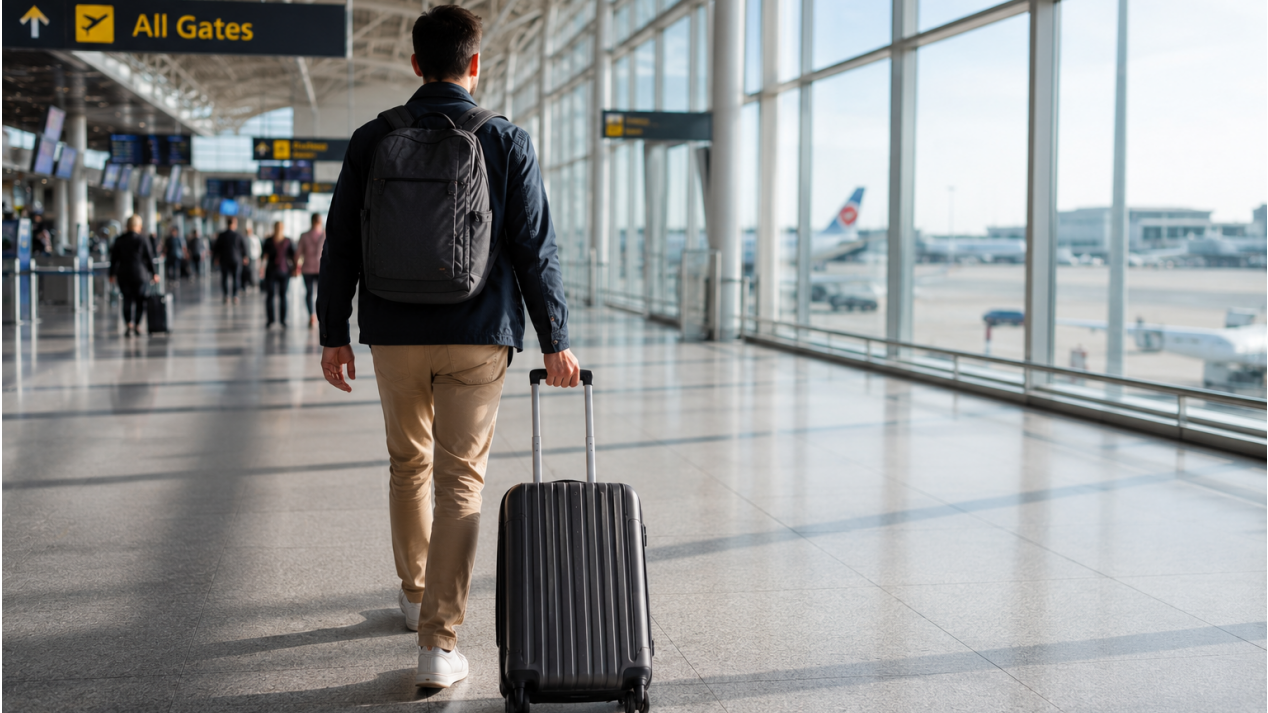
For years, travel basically meant one thing:
Leaving home with a 20-inch carry-on suitcase.
But over the past two years, a noticeable behavioral shift has emerged in airports, train stations, and city streets around the world.
More and more frequent travelers are choosing to:
- Skip checked luggage
- Stop rolling suitcases
- Travel with only one backpack
This minimalist style of travel — often called “One Bag Travel” — is rapidly becoming the preferred approach among several growing groups:
- Digital Nomads — remote workers constantly changing work locations
- Frequent Business Travelers — professionals focused on speed and efficiency
- Urban Minimal Travelers — travelers who prefer moving freely through cities without heavy luggage
So why are traditional carry-on suitcases slowly losing their dominance?
Are travel backpacks actually better suited for modern mobility?
In this article, we’ll break down the trend through:
· Real travel pain points
· Changes in modern transportation
· Objective comparisons of today’s most popular travel backpacks
Why More People Are Giving Up Traditional Carry-On Suitcases
1. Modern Travel Has Become Increasingly Mobile

The biggest advantage of traditional suitcases is obvious:
rolling heavy weight with minimal effort.
But their weaknesses become painfully obvious in modern urban travel.
Whether it’s:
- Cobblestone streets in Europe
- Endless subway stairs in Japan
- Narrow rainy sidewalks
- Crowded train stations
Suitcase wheels quickly become a burden that slows you down.
A backpack, on the other hand, creates a “body-and-bag-as-one” experience, restoring full mobility and allowing you to move freely across different environments.
2. Airline Carry-On Restrictions Are Becoming Stricter
As global airlines — especially low-cost carriers — tighten carry-on size and weight regulations, suitcase weight itself becomes a disadvantage.
A standard 20-inch hard-shell carry-on usually weighs:
2.5kg to 3.5kg empty.
That alone can consume a huge portion of your allowed cabin baggage weight.
Travel backpacks, however:
- Weigh significantly less
- Compress more easily
- Fit under airplane seats more comfortably
- Adapt better to smaller overhead bins
This helps travelers:
- Avoid expensive baggage fees
- Speed up boarding
- Skip long baggage claim lines

3. Modern Travelers Need a “Mobile Workspace”
In the past, travel meant:
“Life starts after arriving.”
Today, more professionals and digital nomads need to work:
- In airport cafés
- On trains
- Between flights
- While constantly moving
Traditional carry-on suitcases are poorly designed for this lifestyle.
Most require fully opening the case just to grab:
- A laptop
- Charging cables
- Noise-canceling headphones
Modern travel backpacks function more like:
A mobile workstation.
They include:
- Dedicated laptop compartments
- Quick-access pockets
- Tech organization systems
- Flexible storage layouts
But Backpacks Won’t Completely Replace Suitcases
Objectively speaking, suitcases still have major advantages for:
- Long-term relocation travel
- Family trips
- Heavy winter clothing
- Large photography equipment setups
The real change is this:
In the past:
People automatically brought a suitcase.
Now:
More people first ask:
“Can I do this trip with just one backpack?”
That mindset shift is reshaping modern travel.
2026 Travel Backpack Market Comparison & Buying Guide
If you’re considering switching from a suitcase to One Bag Travel, choosing the right backpack matters.
The market is crowded with options, and blindly following trends often leads to disappointment.
Here are three highly discussed backpacks currently popular among:
- Tech enthusiasts
- EDC communities
- Digital nomads
- Frequent travelers
|
Backpack |
Capacity |
Best For |
Weight |
Main Material |
|
Peak Design Travel Backpack |
30L–45L Expandable |
Photography / Heavy Long-Term Travel |
~2kg |
400D Waterproof Canvas |
|
~25L |
Frequent Business Travel / Durable Long-Term Use |
~1.5kg |
840D CORDURA® |
|
|
~20–30L |
Urban Travel / Daily Commuting |
~1.2kg |
NA-TEX™ High-Density Composite Fabric |
1. Peak Design Travel Backpack 45L
The Ultimate Fortress for Photographers and Heavy Tech Travelers
A favorite among photographers and designers, this backpack pushes equipment organization and access to the extreme.
It supports:
- Full clamshell opening
- Side access
- Rear access
It also integrates seamlessly with Peak Design’s Camera Cube system.
Its expandable design allows the backpack to shift between:
- 30L commuter mode
- 45L full travel mode
Strengths
- Exceptional modular photography system
- Excellent organization
- Extremely expandable
Weaknesses
- Very heavy empty weight (~2kg)
- Easily exceeds airline weight limits when fully packed
- Stiff structure feels oversized for daily commuting
- Expensive
Best For
Professional photographers, filmmakers, and heavy gear users carrying:
- Multiple cameras
- Lenses
- Drones
- Large tech setups

2. NayoSmart Herman H2
A Rugged Choice for Frequent High-Intensity Travel
The Herman H2 is clearly designed for:
Long-term durability and high-frequency travel.
Its standout feature is:
840D CORDURA® fabric
This material is widely recognized for:
- Tear resistance
- Abrasion resistance
- Long-term durability
It handles:
- Airport friction
- Train luggage racks
- Dragging across rough surfaces
with ease.
Strengths
- Extremely durable exterior
- Strong structure that resists collapsing
- Good weight distribution support
- Excellent protection
Weaknesses
- Heavier than lightweight urban backpacks
- Aesthetic leans toward technical utility style
Best For
Frequent business travelers constantly moving between:
- Airports
- High-speed trains
- Hotels
- Urban transportation systems

3. NayoSmart Herman Pro
A Minimal Urban Hybrid for Work and Travel
If you don’t want a bulky travel backpack that only gets used occasionally, the Herman Pro takes a completely different approach.
Its semi-rolltop structure allows it to function as:
- A sleek commuter backpack during daily use
- An expandable travel bag when needed
By releasing the rolltop section, the upper storage area expands significantly for clothing and travel gear.
Strengths
- Clean, modern urban aesthetic
- Doesn’t look overly “technical”
- Excellent vertical expansion flexibility
- Comfortable for everyday use
Weaknesses
- Rolltop access can be slower for small items
- Less intuitive than fully opening travel packs
Best For
Minimalists and urban professionals who want:
- One backpack for commuting
- Weekend trips
- Daily city life

Final Buying Advice: How to Choose Your First Travel Backpack
Switching from a suitcase to a travel backpack is really a shift in mindset:
From:
“Bring more stuff.”
To:
“Move more freely.”
Before buying, evaluate these three key factors:
1. Consider Your Travel Length & Equipment Needs
If you must carry:
- Cameras
- Tripods
- Large tech setups
A professional backpack like Peak Design makes sense.
If you mainly travel with:
- Clothes
- Laptop
- Daily essentials
The Herman H2 already provides more than enough protection and capacity.
2. Think About Daily Versatility
If you want the backpack to work for:
- Office commuting
- Coffee shop work
- Weekend travel
then a cleaner urban option like the Herman Pro offers much better flexibility.
3. Don’t Ignore Airline Weight Limits
If your goal is low-cost airline travel, empty weight matters a lot.
Heavy photography backpacks may actually become a problem at the boarding gate, forcing you to pay unexpected baggage fees.
Travel Lighter, Move Freer
Modern travel is no longer just about getting from Point A to Point B.
Its real beauty lies in:
- Mobility
- Flexibility
- Freedom
The moment you put down the suitcase and free both hands, travel starts to feel completely different.
Sometimes the best part of a trip is simply knowing:
you can turn down any street, at any moment, without being dragged down by your luggage.
Share:
What Bag Capacity Do You Need? 3L to 25L: A Practical Capacity Guide
No More Checked Baggage Fees! Top Carry-On Backpacks Meeting 2026 Airline Free Personal Item Rules